

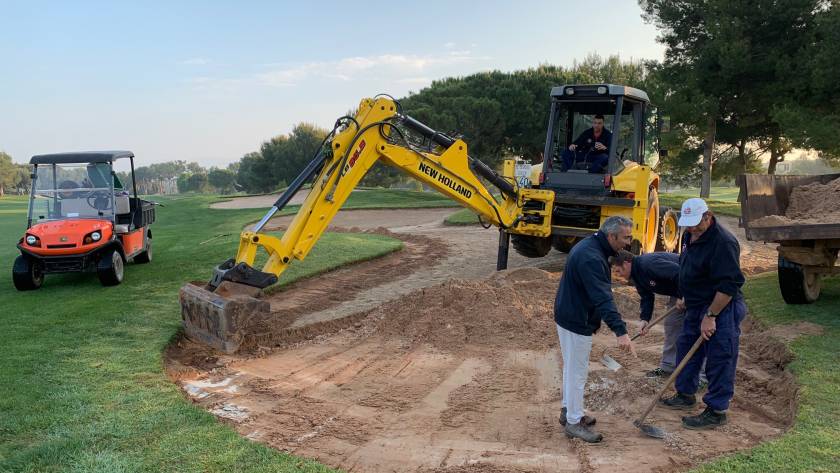
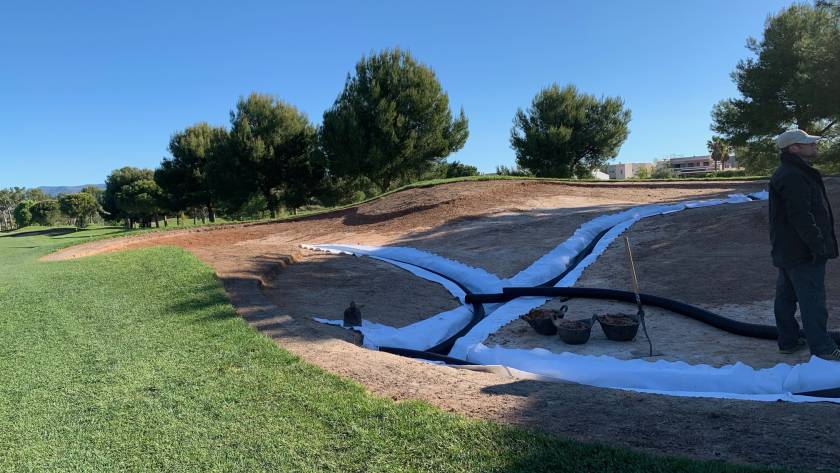
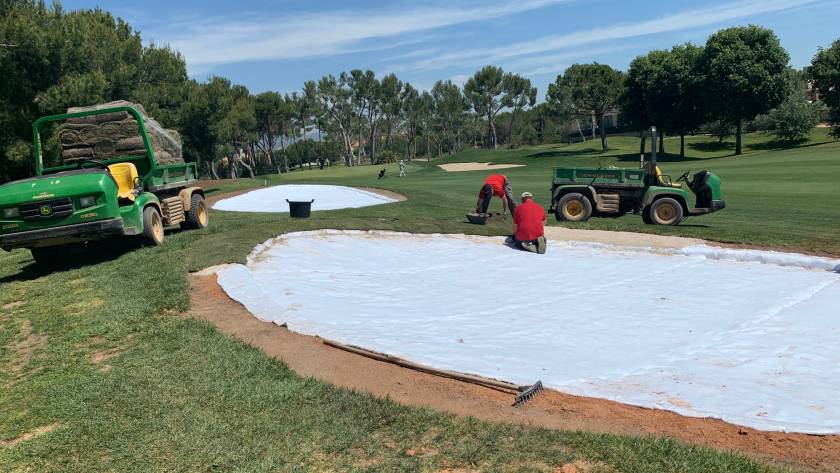
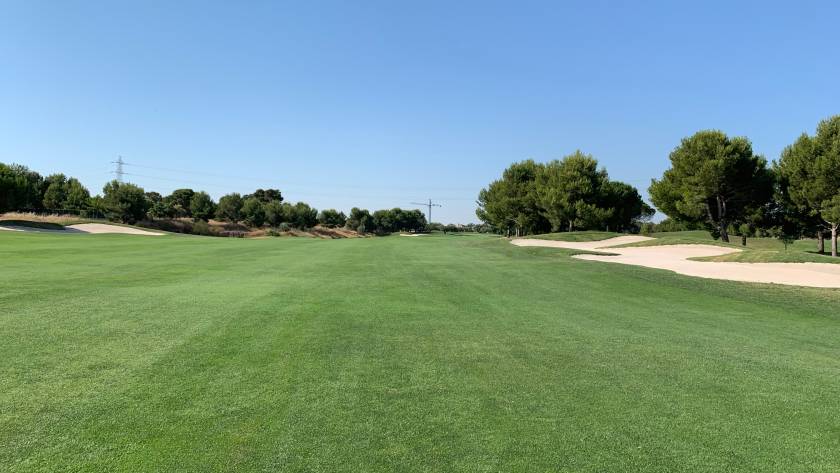
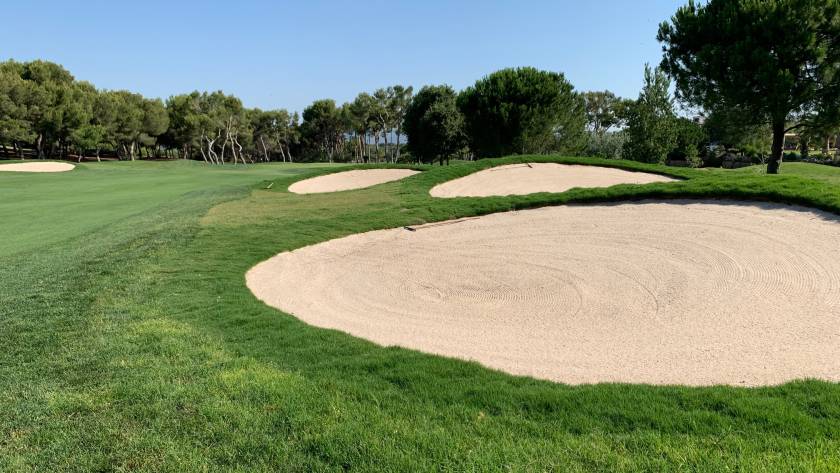
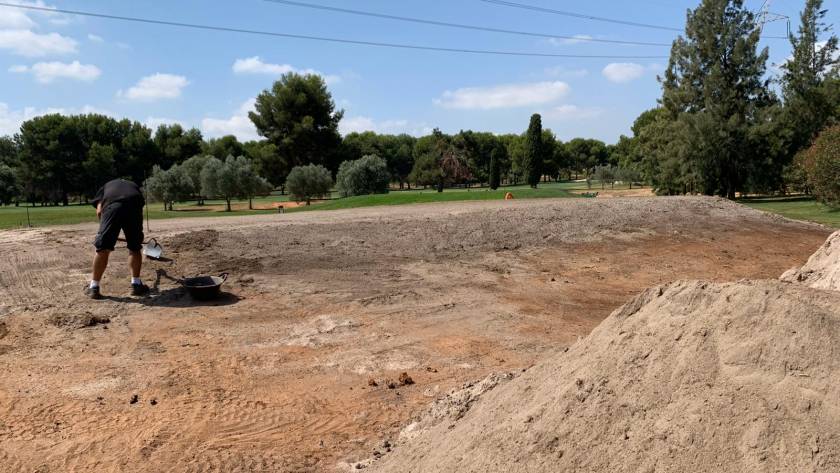
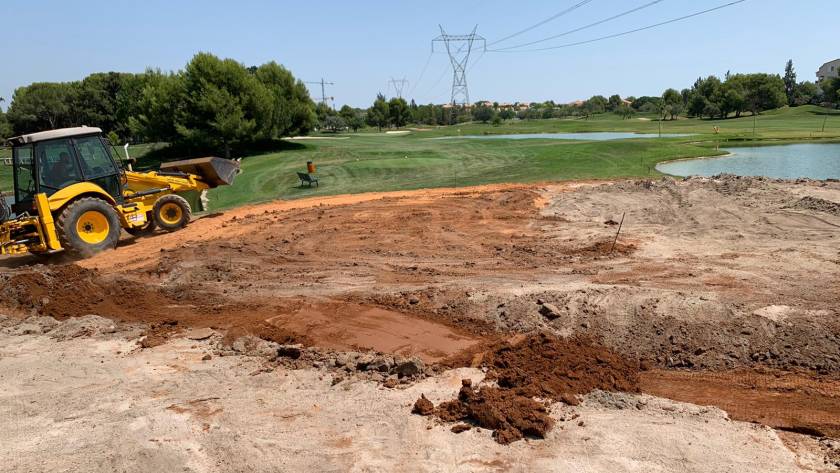
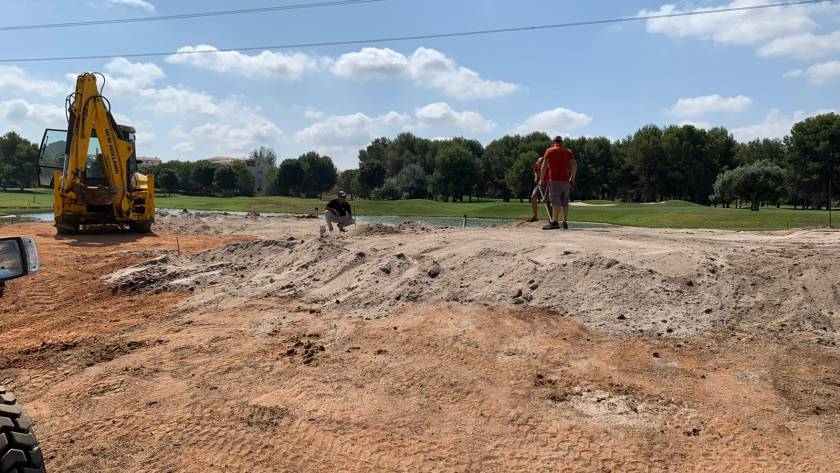

The primary objective of renovating the fairway bunkers on the “Nuevos” course is to improve bunker consistency and keep the sand clean. The process includes removing contaminated sand, installing new drainage systems and cleaning existing ones, as well as laying a geotextile liner to prevent the new sand from becoming contaminated. Bermuda 419 turf is used around the bunkers due to its slow growth, and new sand is added to a compacted depth of 10 cm.
The primary objective of renovating the fairway bunkers on the “Nuevos” course is to improve bunker consistency and keep the sand clean. The process includes removing contaminated sand, installing new drainage systems and cleaning existing ones, as well as laying a geotextile liner to prevent the new sand from becoming contaminated. Bermuda 419 turf is used around the bunkers due to its slow growth, and new sand is added to a compacted depth of 10 cm.
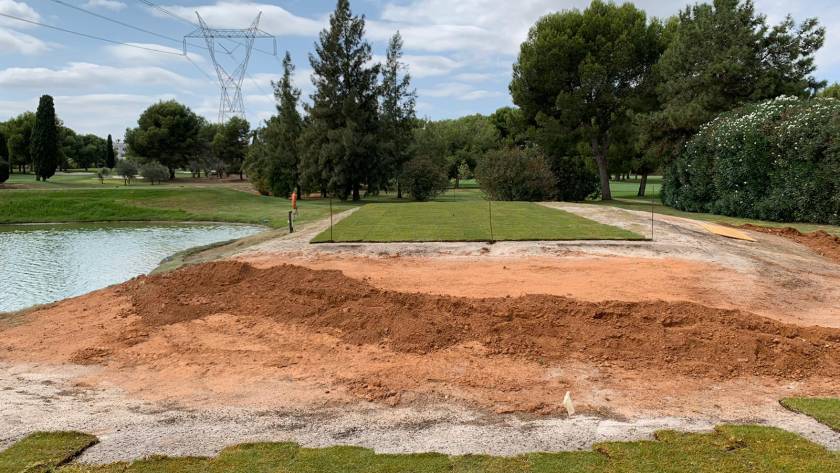
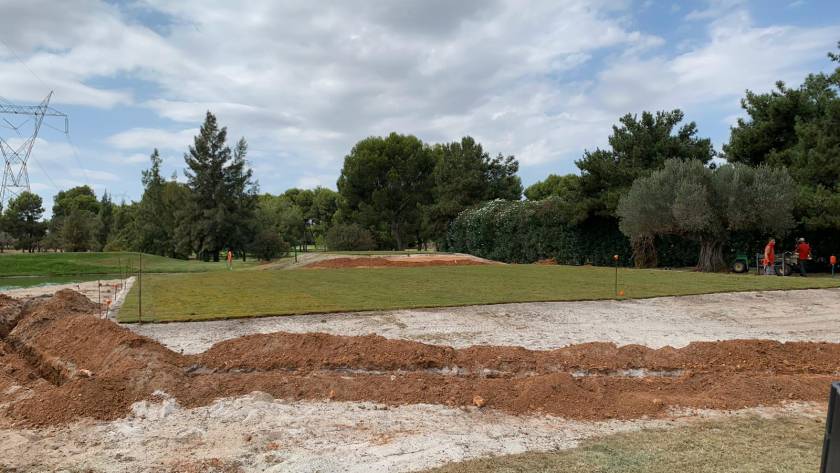
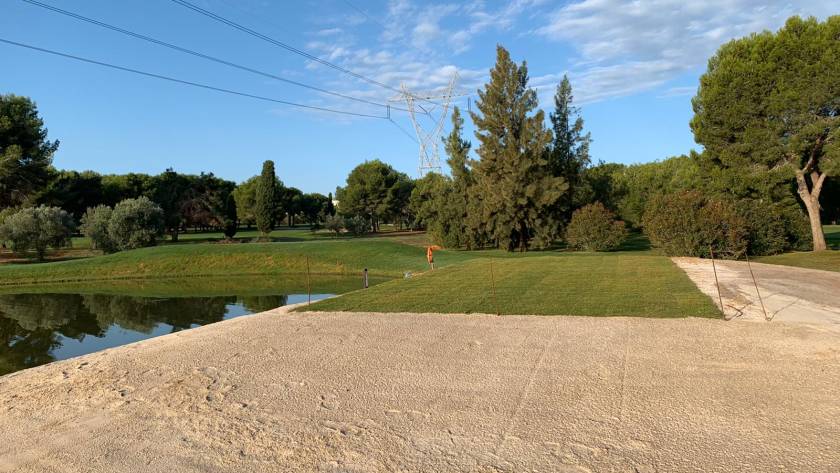
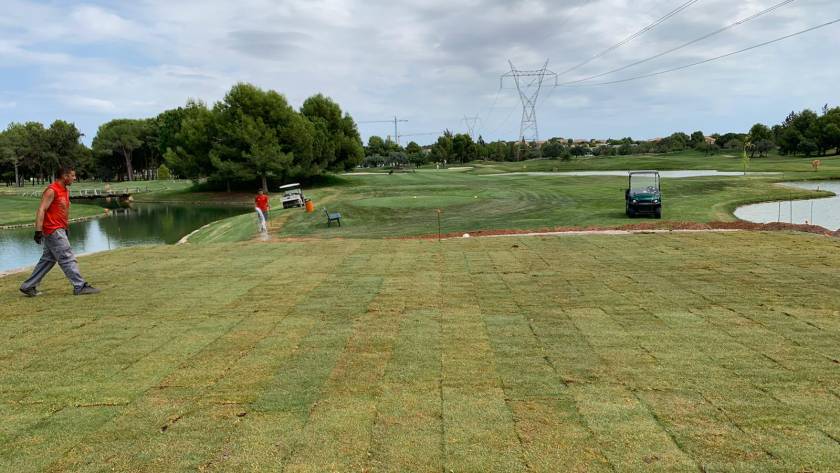
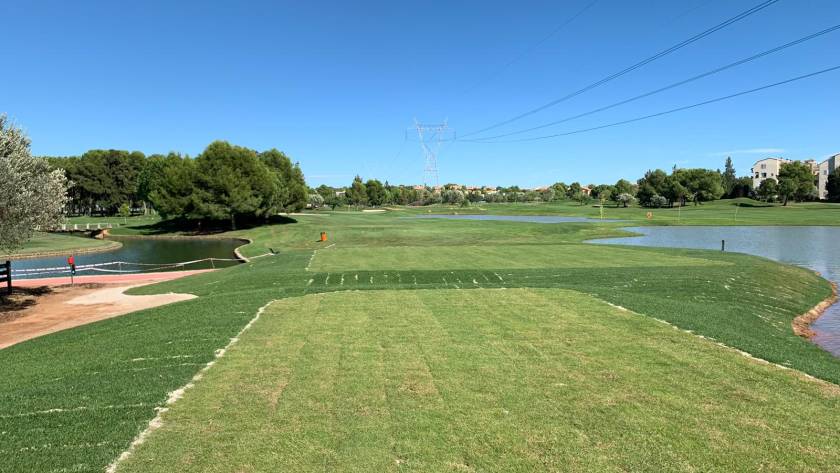
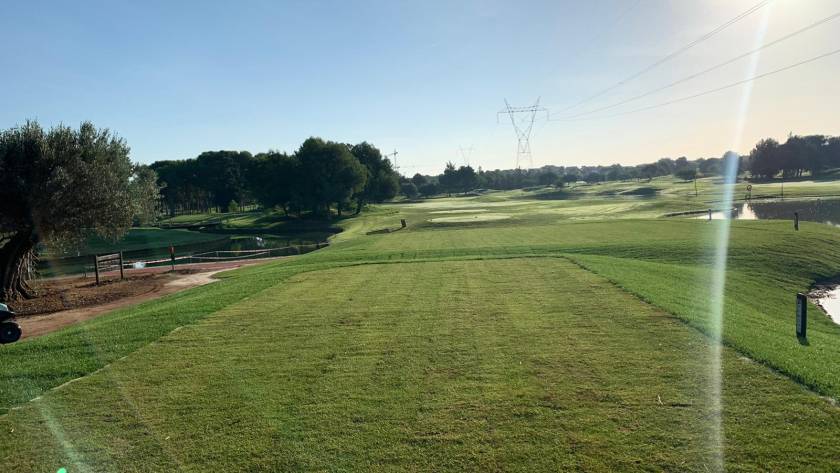
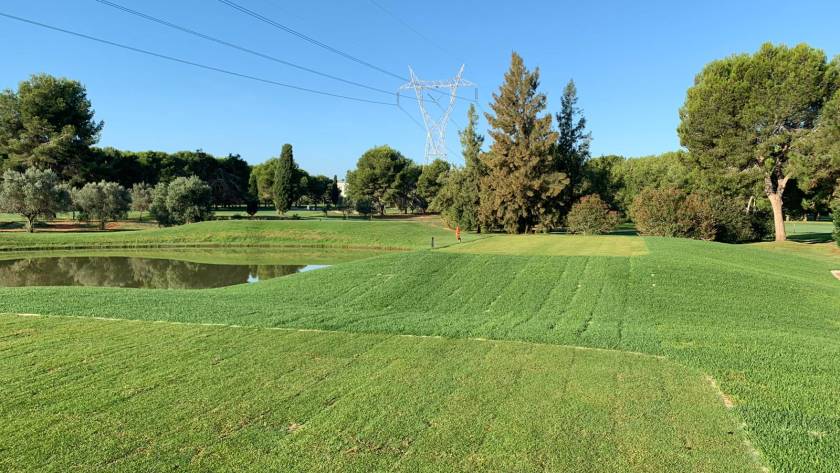
In recent months, a renovation has been carried out on the Hole 8 Tees at Lagos (Dimoni). The white tee box has been leveled and re-turfed due to unevenness and poor orientation. Additionally, the tee platform for the yellow and blue markers has been expanded from 80m² to 195m². “Paspalum SeaIsle 2000” turf was used on the platforms and Tall Fescue (Festuca arundinacea) on the slopes.
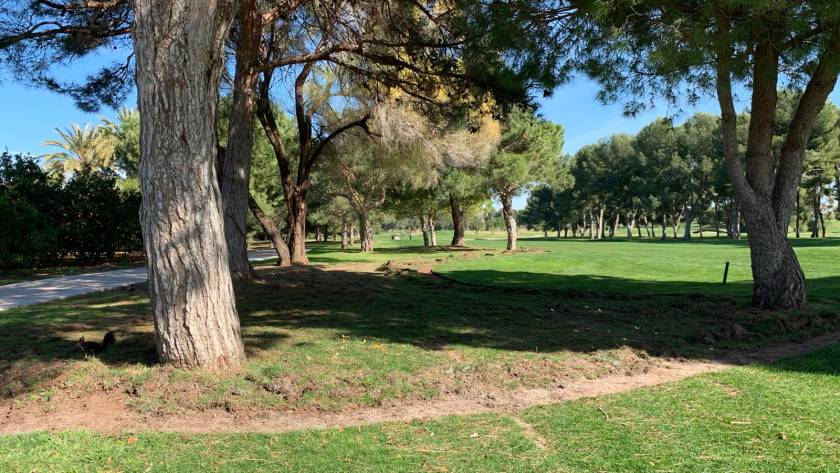
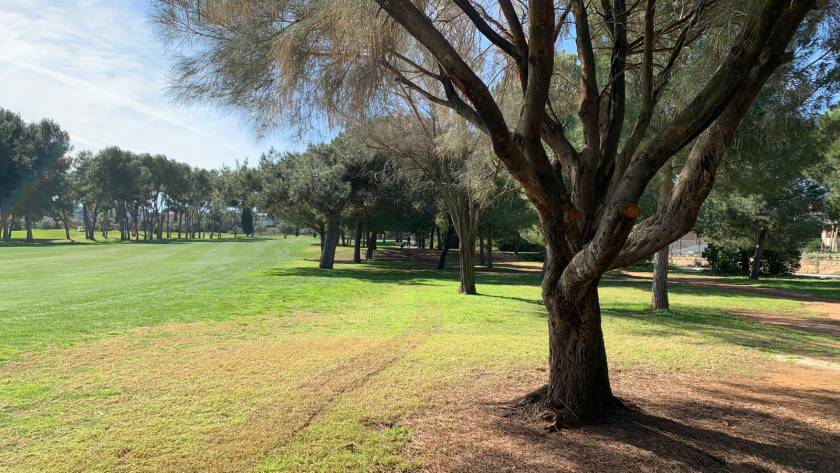
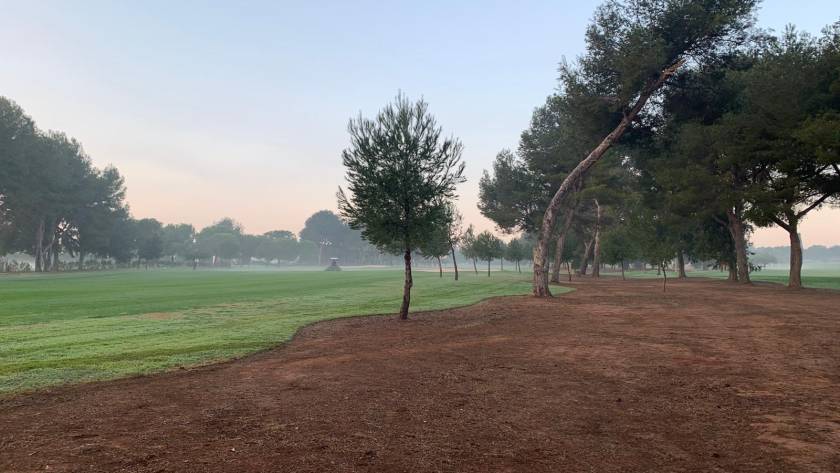
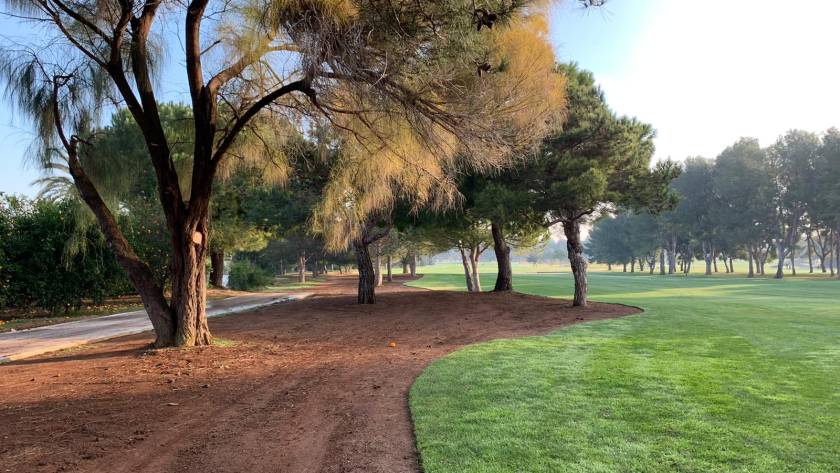
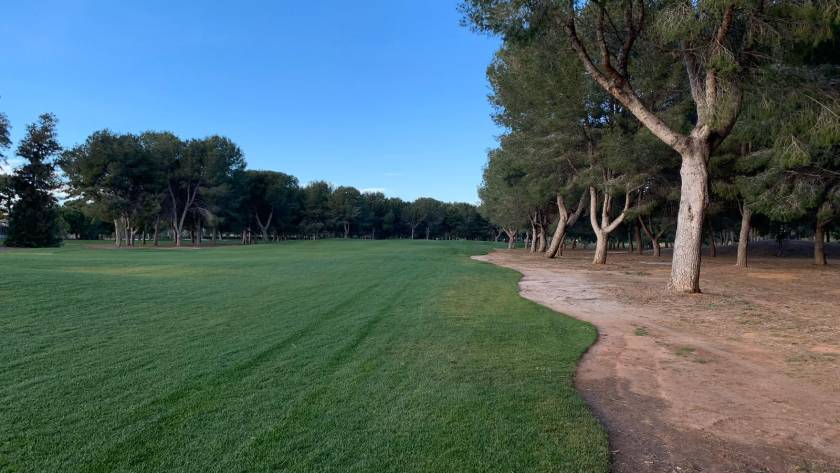
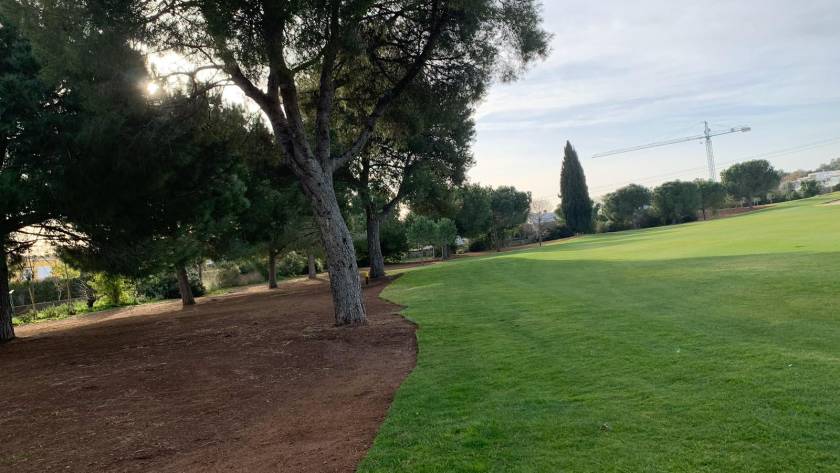
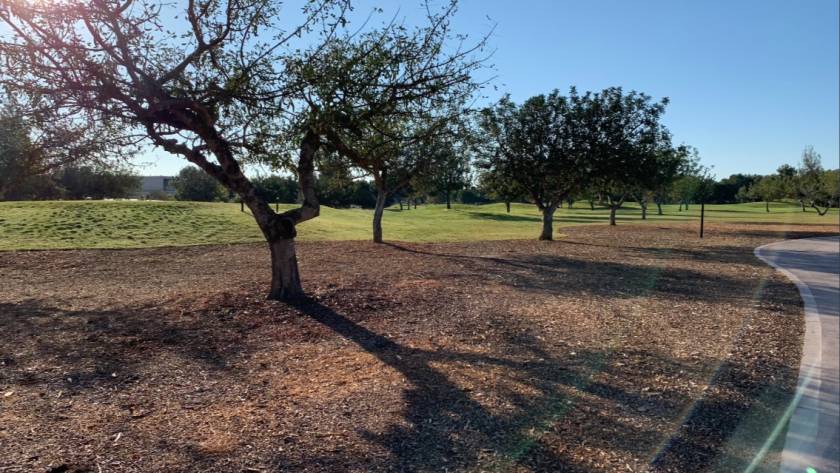
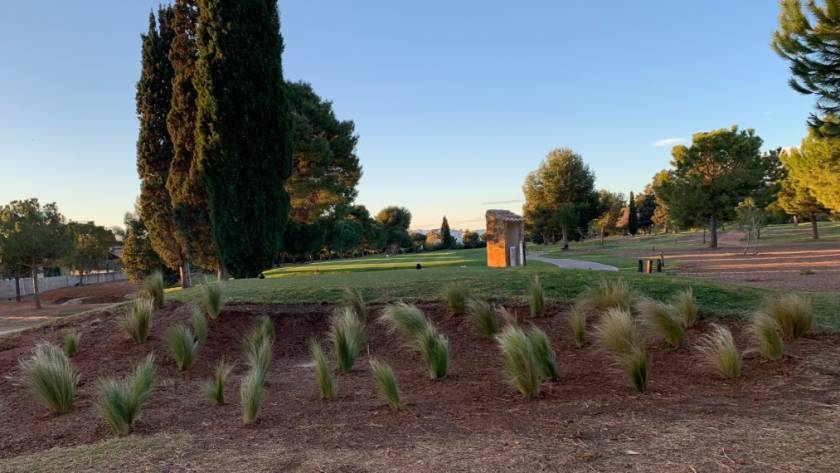
The club is currently replacing areas of rough with mulch to improve sustainability and the efficient use of resources. This change provides several benefits, such as keeping the soil moist, reducing evaporation, controlling weed growth, and regulating soil temperature. Furthermore, mulch improves soil aeration and structure, can increase fertility, and helps prevent plant diseases. It also facilitates tree care and reduces damage caused by gardening equipment.
The club is currently replacing areas of rough with mulch to improve sustainability and the efficient use of resources. This change provides several benefits, such as keeping the soil moist, reducing evaporation, controlling weed growth, and regulating soil temperature. Furthermore, mulch improves soil aeration and structure, can increase fertility, and helps prevent plant diseases. It also facilitates tree care and reduces damage caused by gardening equipment.
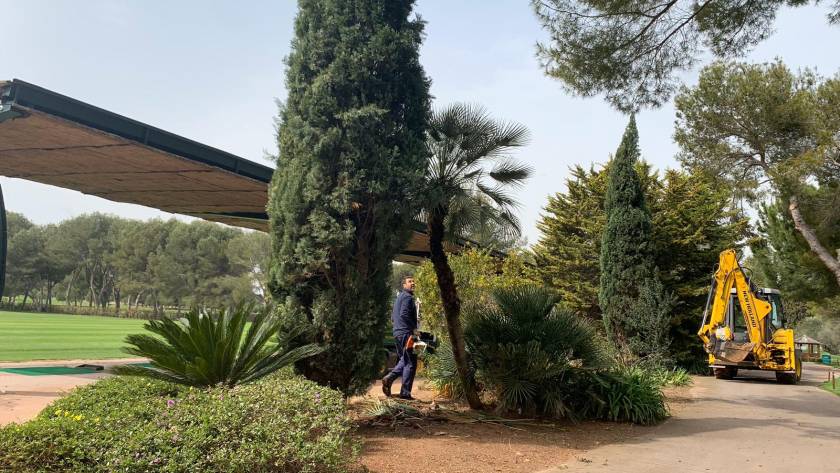
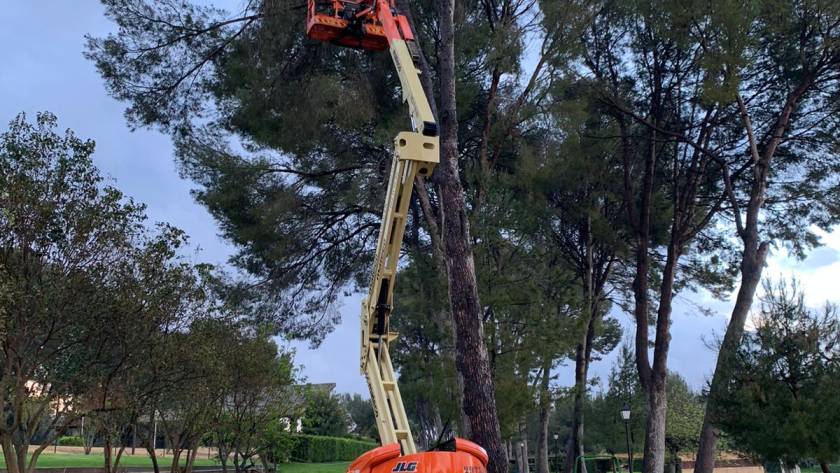
Since the closure due to the COVID-19 pandemic, the maintenance team has continued to work to maintain the club’s facilities. They organized into two groups that follow strict health protocols. Although they faced a heavier workload due to grass growth and tree damage, they were forced to reduce the workday by 30% to comply with social distancing. They hope that new restrictions will not affect their access to the club and are confident that the course will be in good condition for its reopening.
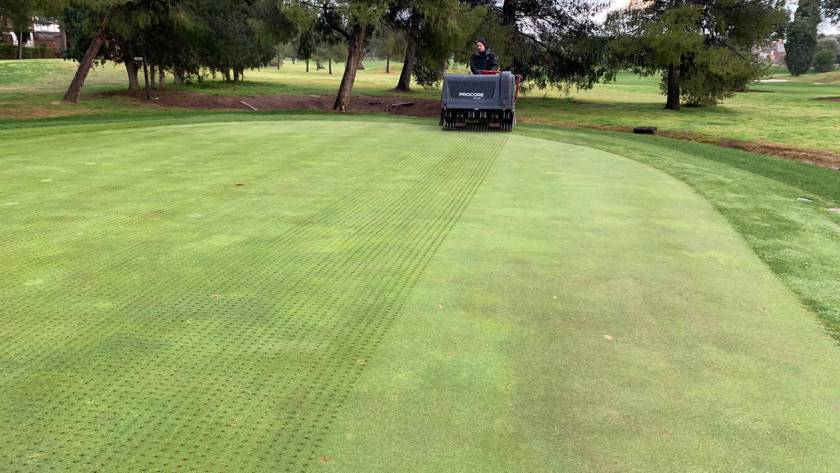
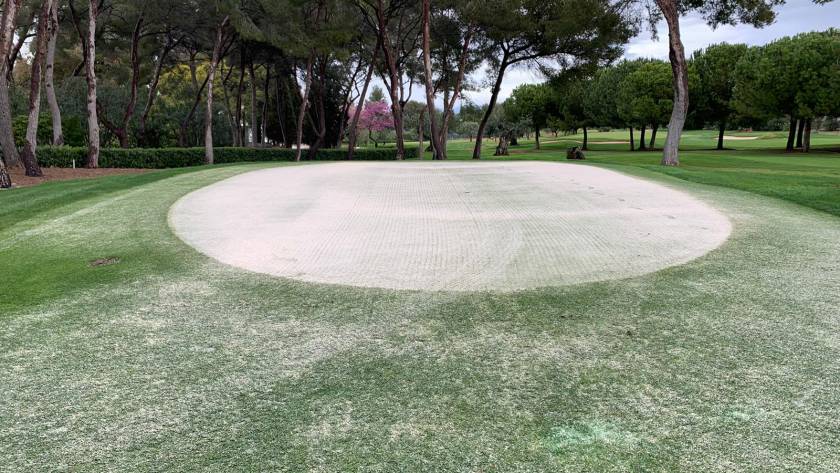
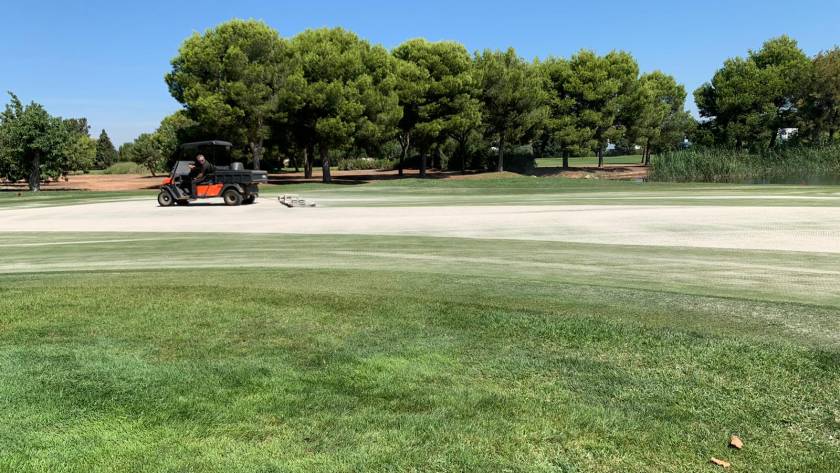
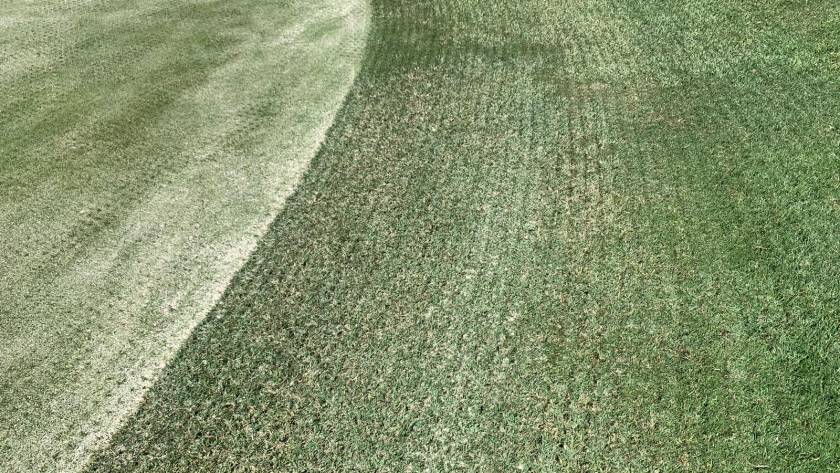
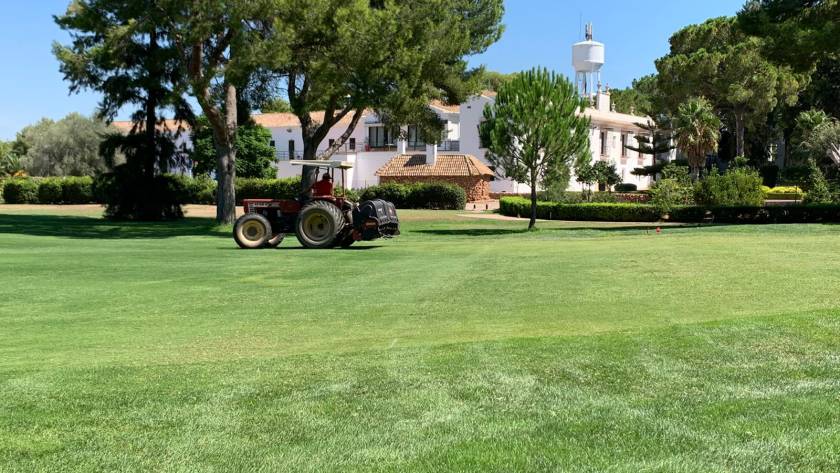
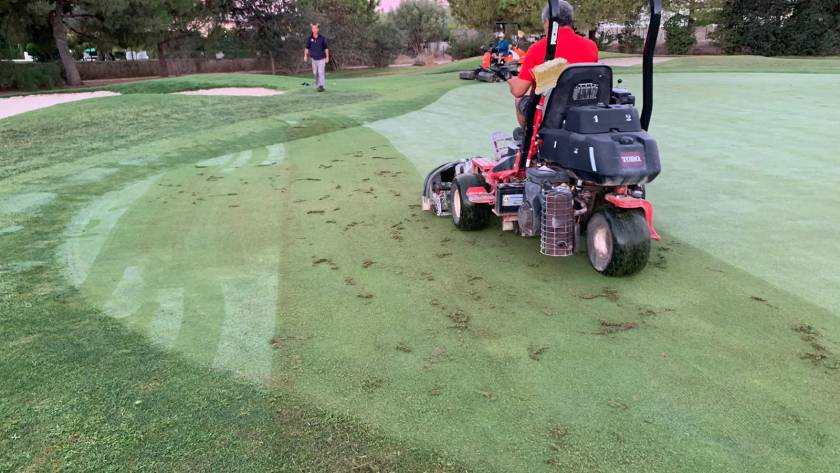
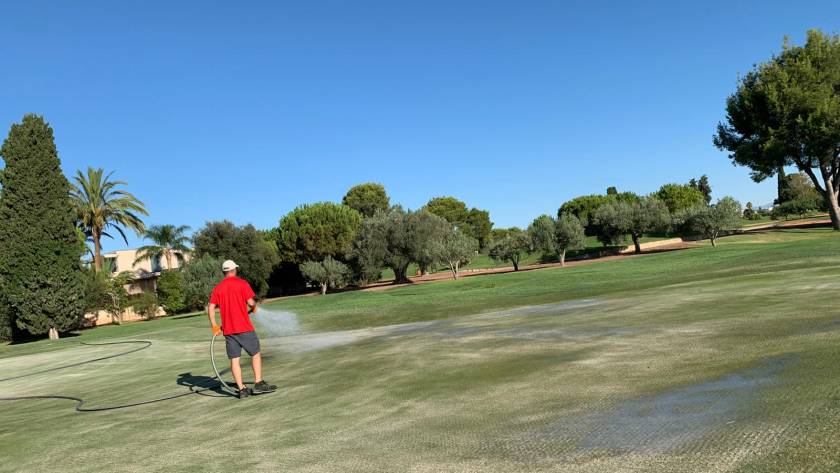
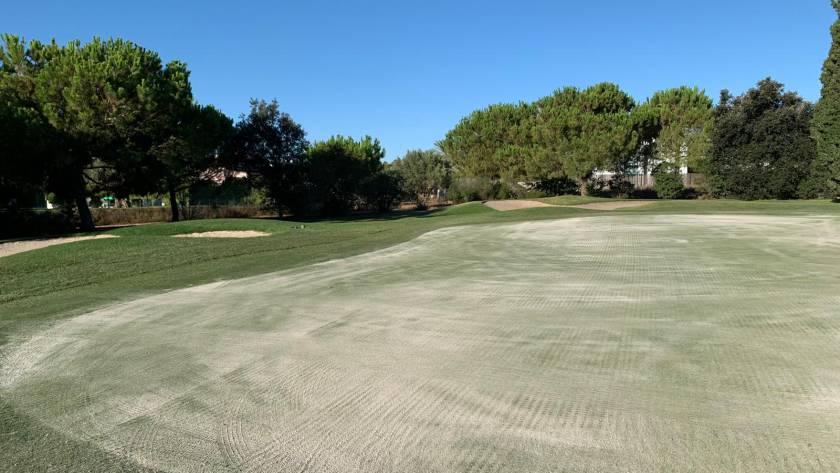
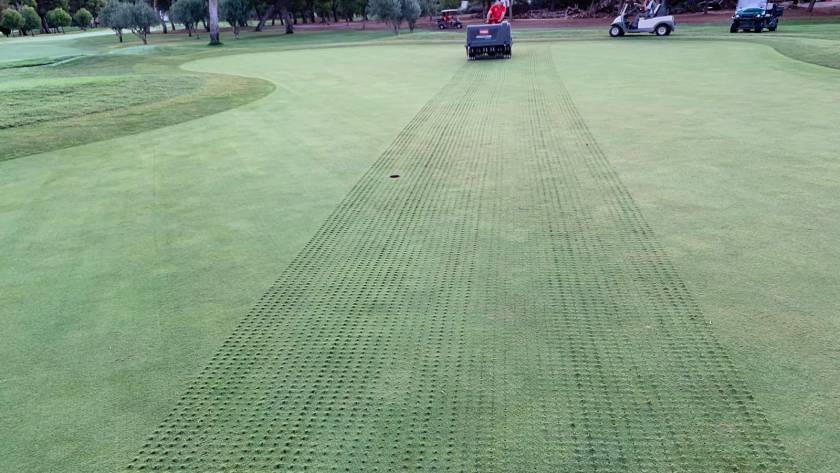
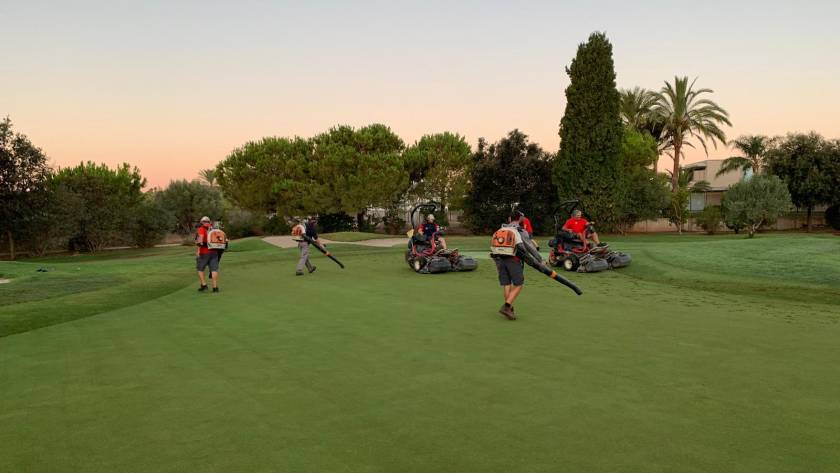
From August 17th to the 28th, the maintenance team is carrying out important work on the club’s foregreens, collars, and greens. These tasks include aeration, overseeding, and topdressing on the foregreens and collars, as well as micro-tining and topdressing on the greens. Additionally, fertilization will be performed in all overseeded zones, including the Masía, Lagos, Nuevos, and P&P courses, as well as practice areas. These activities are essential for improving turf quality, providing better aeration, removing organic matter, and enhancing soil health. The Poa Pratensis (Kentucky Bluegrass) variety is being used for overseeding collars and foregreens, which reduces the need for annual overseeding and increases resistance to summer weather conditions.
Desde el 17 hasta el 28 de agosto, el equipo de mantenimiento está llevando a cabo importantes trabajos en los Antegreenes, collares y Greenes del club. Estas labores incluyen pinchado, resiembra y recebo en los Antegreenes y collares, así como micropinchado y recebo en los Greenes. Además, se realizará abonado en todas las zonas resembradas, incluyendo los recorridos de Masía, Lagos, Nuevos, P&P y áreas de entrenamiento. Estas actividades son esenciales para mejorar la calidad del terreno, proporcionando mayor aireación, eliminando materia orgánica y mejorando la salud del suelo. Se utilizará la variedad cespitosa Poa Pratensis en la resemebra de collares y Antegreenes, lo que reduce la necesidad de resiembra anual y aumenta la resistencia a las condiciones climáticas del verano.
| Hoyos | 1 | 2 | 3 | 4 | 5 | 6 | 7 | 8 | 9 | |
| Amarillas | 80 | 83 | 74 | 101 | 120 | 142 | 117 | 100 | 101 | 918 |
| Rojas | 62 | 67 | 52 | 72 | 96 | 120 | 73 | 78 | 70 | 690 |
| P&P Masculino | 62 | 83 | 52 | 101 | 96 | 120 | 73 | 100 | 70 | 757 |
| P&P Femenino | 62 | 83 | 52 | 101 | 96 | 120 | 73 | 100 | 70 | 757 |
| Par | 3 | 3 | 3 | 3 | 3 | 3 | 3 | 3 | 3 | 27 |
| Handicap | 16 | 6 | 12 | 2 | 10 | 4 | 14 | 8 | 18 |
| Hoyos | 10 | 11 | 12 | 13 | 14 | 15 | 16 | 17 | 18 | |
| Amarillas | 80 | 83 | 74 | 101 | 120 | 142 | 117 | 100 | 101 | 918 |
| Rojas | 62 | 67 | 52 | 72 | 96 | 120 | 73 | 78 | 70 | 690 |
| P&P Masculino | 80 | 67 | 74 | 72 | 120 | 71 | 117 | 78 | 101 | 780 |
| P&P Femenino | 80 | 67 | 74 | 72 | 120 | 71 | 117 | 78 | 101 | 780 |
| Par | 3 | 3 | 3 | 3 | 3 | 3 | 3 | 3 | 3 | 27 |
| Handicap | 9 | 11 | 5 | 15 | 3 | 13 | 1 | 17 | 7 |